ASTM F3016 Bollards Explained
A Guide to ASTM F3016 Bollards and Their Importance in Public Safety
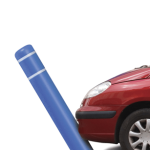
ASTM F3016 is a critical safety standard that addresses the testing of bollards designed to resist vehicle impacts, particularly low-speed collisions. This guide explains why ASTM F3016 bollards matter, how the standard is applied, and how compliance helps reduce liability for businesses, designers, and property owners.
Background and Development of ASTM F3016
Vehicle-to-building crashes have long been a safety concern in the United States, occurring at alarming rates. Industry data shows that storefront crashes alone happen an average of 20 times per day nationwide. These incidents are commonly caused by distracted driving, pedal misapplication, impaired driving, or intentional acts such as theft or vandalism.
The frequency of these events highlighted the need for a standardized way to test and rate bollards designed for low-speed vehicle impacts. In response, ASTM International introduced the ASTM F3016 standard in 2014. The standard establishes measurable performance criteria for bollards intended to protect pedestrians, storefronts, and public spaces.
Why Traditional Bollards Fail ASTM F3016 Standards
Concrete-filled steel bollards are widely used, but they often fail to meet ASTM F3016 testing requirements. One common issue is the lack of effective bonding between the concrete core and the surrounding steel pipe. When impacted, the two materials react differently, reducing the bollard’s ability to absorb and transfer energy.
Concrete has significantly lower tensile strength than steel. During a vehicle impact, this can result in the bollard bending, cracking, or shearing at the base. In many cases, the vehicle continues past the barrier while the bollard itself is propelled forward, creating additional hazards for pedestrians and nearby structures.

ASTM F3016 Test Methodology
ASTM F3016 establishes a controlled testing process to evaluate how well a bollard resists vehicle impact. The standard defines three speed classifications intended to reflect real-world scenarios:
- S10: Tested at speeds between 9 and 18.9 mph
- S20: Tested at speeds between 19 and 27.4 mph
- S30: Tested at speeds between 27.5 and 32.5 mph
Each test uses a 5,000-pound vehicle, typically a pickup truck, to strike the bollard. Performance is measured by both impact speed and the distance the vehicle penetrates beyond the barrier.
Penetration Ratings
- P1: Less than 1 foot of penetration (high protection)
- P2: Between 1 and 4 feet of penetration (moderate protection)
- Failure: More than 4 feet of penetration
A complete ASTM F3016 rating combines both speed and penetration, such as S20-P1, indicating a bollard successfully stopped a vehicle traveling approximately 20 mph with less than 1 foot of penetration.
Key Considerations for ASTM F3016-Compliant Bollards
Meeting ASTM F3016 requirements involves more than selecting a strong bollard. Proper design, foundation, and installation are essential. The standard recognizes two primary installation methods:
- Rigid Mount: Foundation remains fixed on impact, typically encased in concrete, with no more than 1 inch of movement.
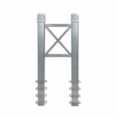
- Shallow Mount: Embedded no more than 12 inches below grade for areas with underground utilities.
If a bollard shifts excessively or allows excessive penetration due to improper design or installation, it does not meet ASTM F3016 performance requirements.
Importance of ASTM F3016 in Liability Protection
ASTM F3016-compliant bollards provide both practical safety benefits and legal protection. The standard establishes a recognized benchmark for performance, helping demonstrate due diligence in protecting public-facing spaces.
Insurance carriers and legal professionals often view ASTM compliance as evidence that reasonable safety measures were taken, reducing liability exposure and potential insurance risk.
Practical Applications of ASTM F3016 Bollards
- Retail Storefronts: Protection from accidental vehicle intrusions
- Public Gathering Areas: Parks, plazas, and outdoor dining
- High-Risk Facilities: Schools, hospitals, and government buildings
Maintenance and Inspection for Long-Term Protection
Bollards should be inspected regularly for corrosion, impact damage, and foundation integrity. After any significant collision, the bollard should be evaluated and repaired or replaced as needed.
A Safe and Reliable Solution
ASTM F3016 establishes essential safety criteria for bollards used in pedestrian and public environments. Specifying ASTM F3016-rated bollards ensures a recognized level of performance while helping reduce liability exposure.
POSTGUARD® offers a complete line of ASTM F3016 crash-rated bollards.